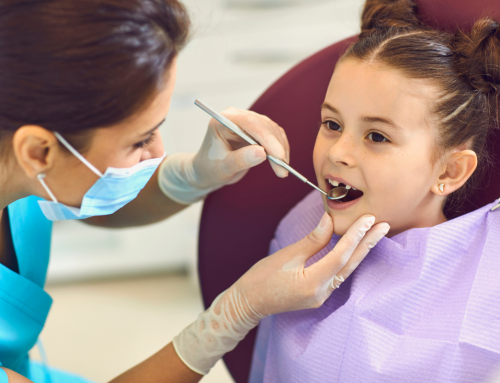

If you’re looking for teeth cleaning in Calgary, you might notice that hygiene appointments today feel different from what you remember.
Dentists and dental hygienists still have the same main goal: to remove plaque, biofilm, stains, and hard deposits that you can’t fully clean at home while keeping an eye on your gums and teeth.
What’s changed is the technology and the way they do this work.
At Somerset Dental on James, our hygiene team uses Guided Biofilm Therapy, or GBT. This method shows where biofilm is before it’s removed, so your hygienist can focus on any remaining hard deposits using the right tools.
Many patients notice that GBT appointments feel more personalized than a traditional dental cleaning. Instead of treating every tooth the same way, your hygienist can see where biofilm builds up and spend more time where it’s needed most.
Teeth Cleaning Has Become More Targeted
Plaque isn’t always easy to spot. This soft layer of bacteria forms all the time on your teeth and can be almost invisible at first. It often gathers along the gumline, between teeth, and around dental work or braces.
GBT starts with a special solution that temporarily dyes spots where biofilm is present. This helps your hygienist see where buildup has collected and clean those areas more precisely.
There’s also an educational benefit. You get to see which areas might need more attention when you brush and floss at home.
If biofilm shows up near a back molar, along the gumline, or around a filling, your hygienist can use that as a starting point for helpful advice. Instead of just telling you to brush better, they can show you exactly where you might be missing and talk about how to clean those spots more effectively.
This visibility is one reason why Guided Biofilm Therapy can make your hygiene appointment feel more focused. Your hygienist can spot biofilm, remove it with the right tools, and spend extra time where it’s needed.
GBT Removes Biofilm Before Hard Deposits Are Addressed
Once the biofilm is visible, your hygienist removes the soft buildup and surface stains using tools that are right for your teeth, gums, and any dental work you have.
After the soft buildup is gone, they can find and remove any remaining hard tartar with scaling tools, if needed. This order lets your hygienist focus on the spots that need professional cleaning.
If you’re used to a cleaning that starts with scaling and ends with polishing, GBT might feel a bit different. But the goal is still to keep your teeth and gums clean and healthy.
Less Scraping Does Not Mean Skipping Tartar Removal
Newer cleaning methods don’t remove the need for scaling in every case.
Plaque and tartar aren’t the same. Plaque is a soft layer of bacteria that forms all the time on your teeth. If it stays there, minerals in your saliva can harden it into tartar, or calculus. Once tartar forms, you can’t remove it by brushing or flossing at home.
During a GBT appointment, your hygienist still removes any hard deposits if they’re there. The difference is that tools are used only after the soft biofilm and stains have been removed.
If there’s not much tartar, you might notice less scaling. But if there is hard buildup, your hygienist will still use the right tools to remove it safely and completely.
What Does Research Say About GBT?
Research on Guided Biofilm Therapy is still emerging. Studies comparing GBT with conventional hygiene and periodontal-maintenance approaches suggest that both methods can improve plaque and gum-health measures. Some trials also report better patient comfort and shorter treatment times with GBT in specific clinical settings.
A 2021 randomized controlled trial compared GBT with conventional scaling and root planing in 50 patients receiving supportive periodontal treatment. After six weeks, both groups had significant reductions in plaque and gingival bleeding. GBT required approximately 15% less chair time, and patients rated the experience more favourably.
A 2024 12-month split-mouth randomized clinical trial involving patients with gingivitis found that both GBT and conventional ultrasonic debridement with rubber-cup polishing produced clinically satisfactory plaque and bleeding outcomes. At selected maintenance visits, the GBT protocol reduced treatment time by approximately 24.5% to 25.1%. Participants also perceived GBT as more comfortable and more often preferred it.
The practical takeaway is not that GBT must outperform conventional cleaning on every clinical measure to be useful. Rather, it is another effective approach to professional biofilm management that may offer a more comfortable and efficient experience for some patients.
GBT Can Be Helpful Around Dental Work
Professional cleaning often requires additional precision around restorations and appliances.
Braces create small spaces around brackets and wires where biofilm can collect. Bridges require careful cleaning around and underneath the restoration. Dental implants also need ongoing attention to the restoration and the surrounding gum tissue.
By making biofilm visible first, GBT helps your hygienist identify buildup in areas that are harder to clean with a toothbrush or floss alone. It can also help patients understand which areas may need a different home-care technique or tool.
Sensitive Teeth Can Change How a Cleaning Feels
Even a routine dental cleaning can be uncomfortable if you have sensitive teeth, exposed root surfaces, or areas of gum recession. Instrumentation can be especially noticeable in those areas.
Because GBT starts by finding and removing biofilm before addressing hard deposits, many people find it more comfortable than past cleanings. Still, comfort varies, and how much scaling you need depends on your oral health and how much buildup you have.
Let your hygienist know if a tooth has recently become sensitive or if you’ve felt discomfort during past cleanings. New or ongoing sensitivity might need a closer look.
Your Teeth Cleaning Schedule Depends on Your Oral Health
Technology doesn’t make every hygiene appointment the same. If you have healthy gums and little tartar, your needs will be different from someone with more buildup, gum disease, dental implants, braces, or dry mouth.
Your hygienist might suggest spending more time on certain areas, using special tools, or setting up a checkup schedule based on your personal risk factors. The Canadian Dental Association supports care plans that fit each patient’s oral health needs, rather than a one-size-fits-all schedule.
GBT gives your dental team another way to customize your cleaning to fit your needs.
A Different Experience for Your Next Teeth Cleaning in Calgary
Dental hygiene has become more focused over time. Guided Biofilm Therapy lets your hygienist show you where biofilm is, remove soft buildup and stains, and then focus on any hard deposits that still need cleaning.
For many people, this can make teeth cleaning feel more comfortable, more informative, and more personalized than the traditional routine they’re used to.
At Somerset Dental on James, we use GBT as part of our preventive, patient-focused dental care. If you’re due for a teeth cleaning in Calgary and want to know if Guided Biofilm Therapy is right for you, our hygiene team can explain how it could help your teeth, gums, and dental work.