Advanced dental technology is changing what happens in the dental chair, often in ways patients notice right away. A cavity can often be treated without a needle. A dental crown can be designed, made, and placed in a single visit. And in research labs, scientists are testing whether people could one day grow a replacement tooth.
Would it surprise you to learn that most of this list is available here in Calgary? Four of the six are already part of how we care for patients at Somerset Dental on James. Here’s a look at six dental advances worth knowing about, what each one does for patients, and how far along it is.
1. Dental Lasers That Reduce the Need for Needles and Drills
For decades, treating a cavity meant two things many patients dread: an injection to numb the area and the sound of a drill. Dental lasers offer a different approach. Instead of a spinning bur, a focused beam of light energy removes decay and reshapes tissue with a high degree of precision.
Depending on the laser and the procedure, patients may need little or no freezing. That means no lingering numbness afterward, which is especially helpful for children and for adults heading back to work. Lasers are also used on soft tissue, for example, to reshape the gums.
At Somerset Dental on James, we use the Solea laser for many fillings and soft tissue treatments, often without needles. Lasers aren’t suitable for every procedure, so we will recommend what fits your situation.
2. Digital Smile Design: Seeing Cosmetic Results Before Treatment
Cosmetic dental work used to involve a leap of faith. You’d agree to veneers or orthodontic treatment based on a description, a few photos, or a wax model, then wait to see the result.
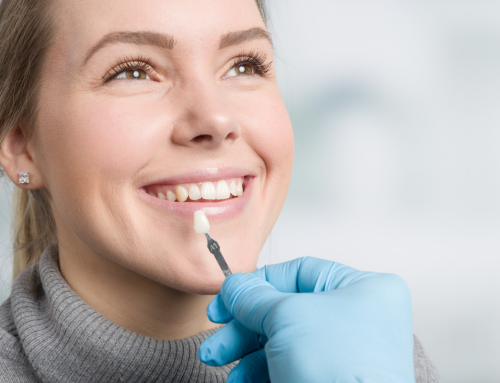
Digital smile design uses photos, video, and 3D scans of your teeth and face to plan treatment around your own proportions. Video plays a big role, because a smile looks different when you’re talking or laughing than it does in a still photo. Some practices also create a physical mock-up you can try in your mouth, so you can judge the shape and length of your new teeth on your own face before treatment begins.
Somerset Dental on James offers Digital Smile Design (DSD) through a two-appointment consultation that includes a mock-up of your proposed smile. We are the only clinic in Calgary to offer DSD technology to our patients.
3. Digital Scans and Same-Day Crowns
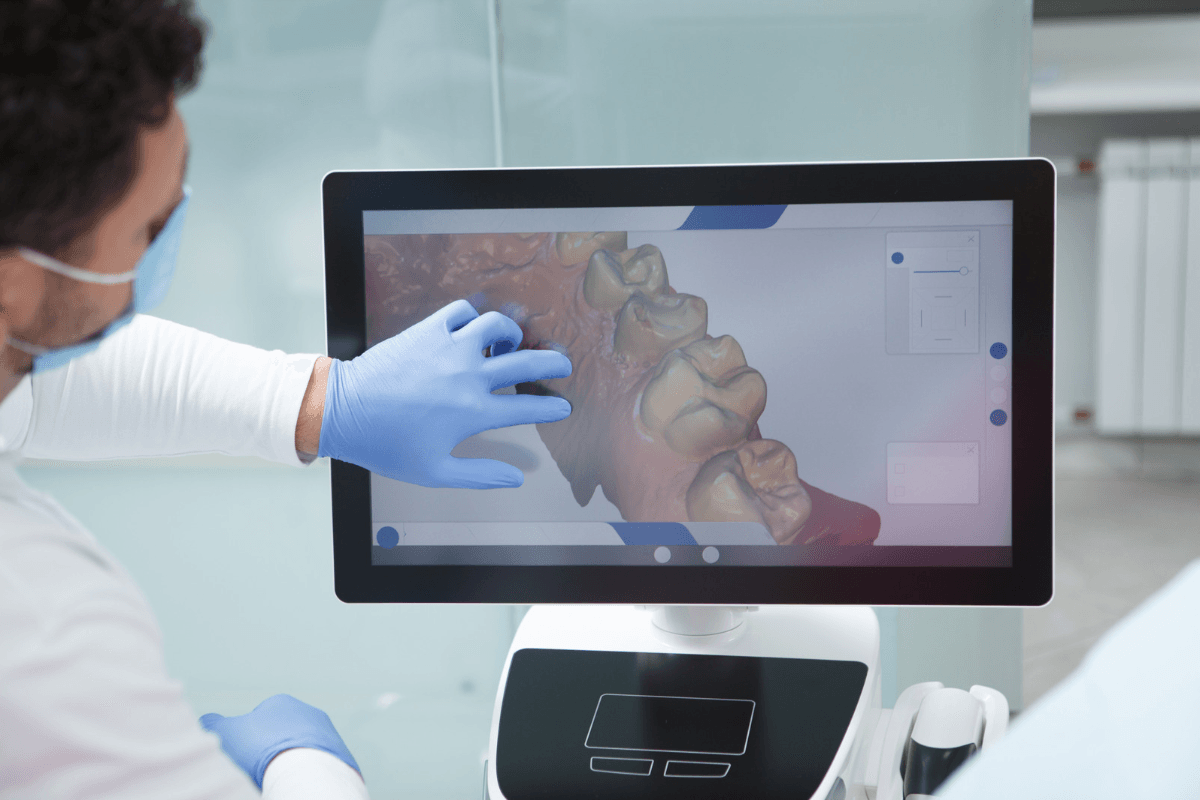
If you’ve ever bitten into a tray of impression putty and waited for it to set, this one is for you. Intraoral scanners use a small wand to capture a detailed 3D image of your teeth in a few minutes, with no putty involved.
Those scans feed into CAD/CAM software (computer-aided design and manufacturing), which lets a dentist design a restoration on screen. An in-office milling machine can then carve a crown from a solid block of ceramic while you wait. 3D printers are also becoming common in dentistry, where they’re used to produce models, surgical guides, and some dental appliances.
The practical difference for patients is fewer appointments. A crown that once needed a temporary and a second visit can often be completed in one. Somerset Dental on James offers same-day crowns using this approach.
4. Cleanings That Target Biofilm
Plaque is a biofilm, a sticky layer of bacteria that builds up on teeth and along the gumline. It can be hard to see, which makes it easy to miss during brushing and even during a routine cleaning.
Guided Biofilm Therapy (GBT) starts with a disclosing solution that temporarily colours biofilm so it’s visible. The hygienist removes the soft buildup and surface stains first, then uses scaling tools on hardened tartar only where needed. Early research suggests GBT can shorten treatment time, and many patients find it more comfortable than a traditional cleaning, although the research is still developing.
Somerset Dental on James offers GBT cleanings, which can be adapted for patients with implants, braces, and other dental work.
5. AI That Helps Read Dental X-Rays
Artificial intelligence is starting to play a role in diagnosis. AI software can review dental X-rays and highlight areas that may show decay, tartar buildup, infection at the tip of a root, or problems around existing fillings and crowns.
These tools work as a second set of eyes. In 2022, the U.S. Food and Drug Administration cleared Pearl’s Second Opinion, described as the first AI software to read dental X-rays, and similar tools have followed. The dentist still makes the diagnosis. The software can flag small changes that are easy to overlook, and the highlighted images make it easier for patients to see what the dentist is seeing.
Availability varies from clinic to clinic, so if you’re curious, ask your dental office whether they use one.
6. Medication That Could Regrow Teeth
Of all the advanced dental technology in development, this is one that makes a lot of headlines, so it helps to know where it currently stands.
People get two sets of teeth, but researchers believe we may carry the beginnings of a third set that never develops. A protein called USAG-1 appears to suppress that growth. A Japanese company, Toregem BioPharma, is developing an antibody drug called TRG035 that blocks USAG-1, with the goal of letting those dormant tooth buds develop.
Early human testing began at Kyoto University Hospital in 2024, and a next-phase trial is planned for children born with missing teeth. So far, tooth regrowth has been shown in animal studies, not in people, and there’s no date for when the treatment might become available. For now, implants, bridges, and dentures remain the proven ways to replace a missing tooth.
What Advanced Dental Technology Means for Your Next Visit
Not every clinic uses every tool on this list, and the newest option isn’t always the right one for every patient. The real value of any dental technology shows up in your own care, whether it’s through fewer appointments, less dental anxiety, a clearer picture of the end result, or a more thorough cleaning.
If one of these innovative dental treatments sounds like a fit for you, reach out to Somerset Dental on James to book an appointment.